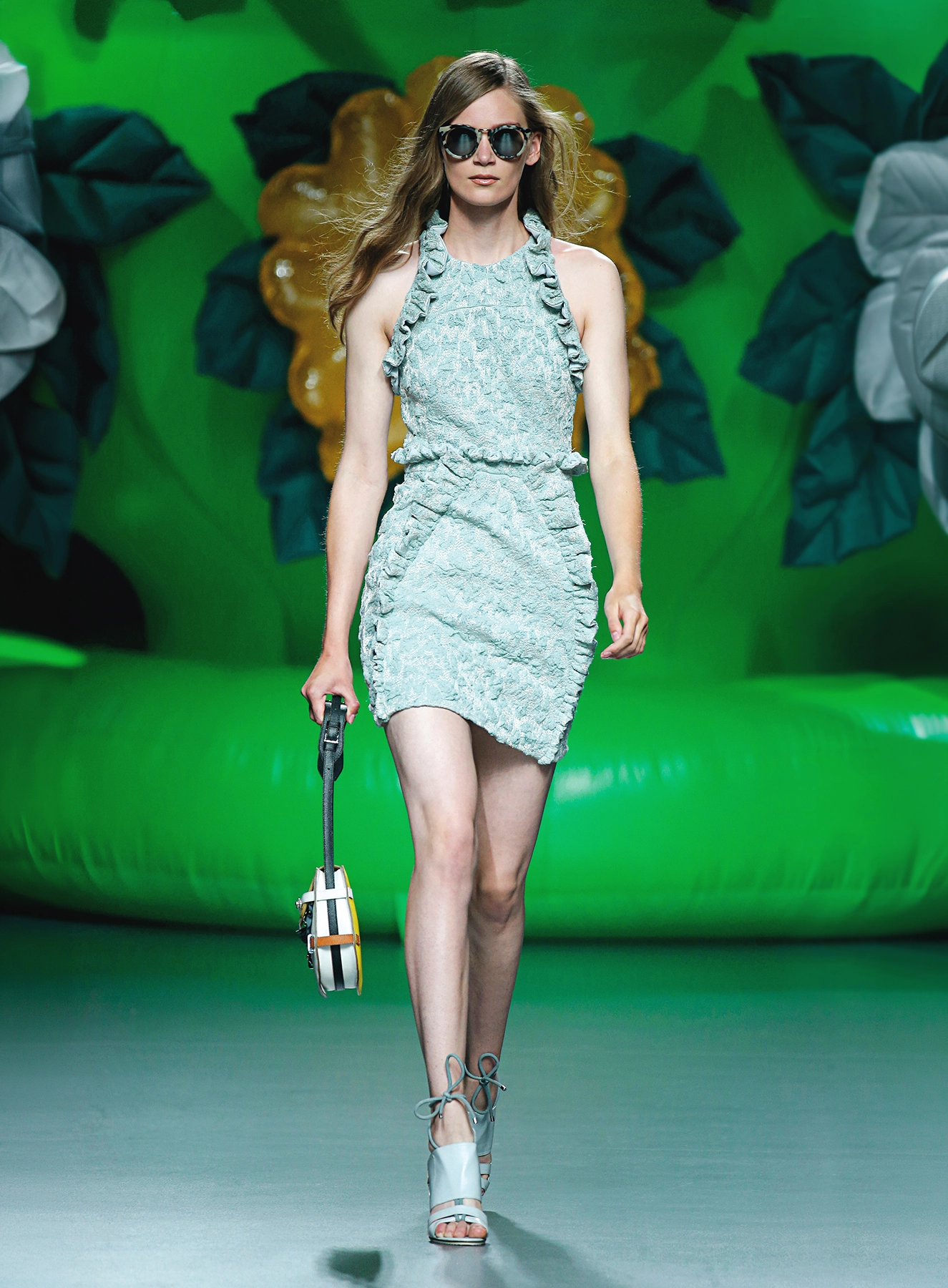
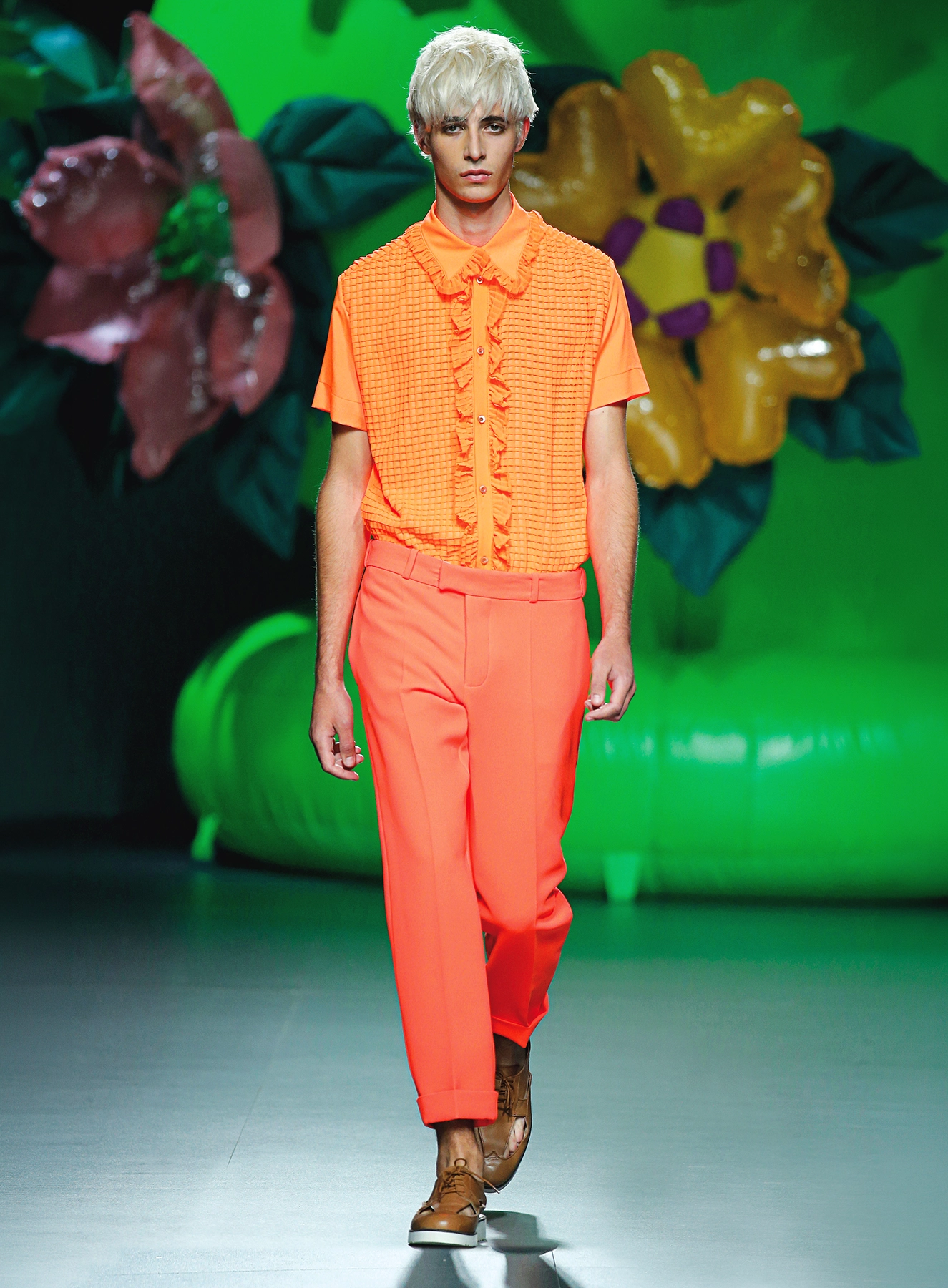
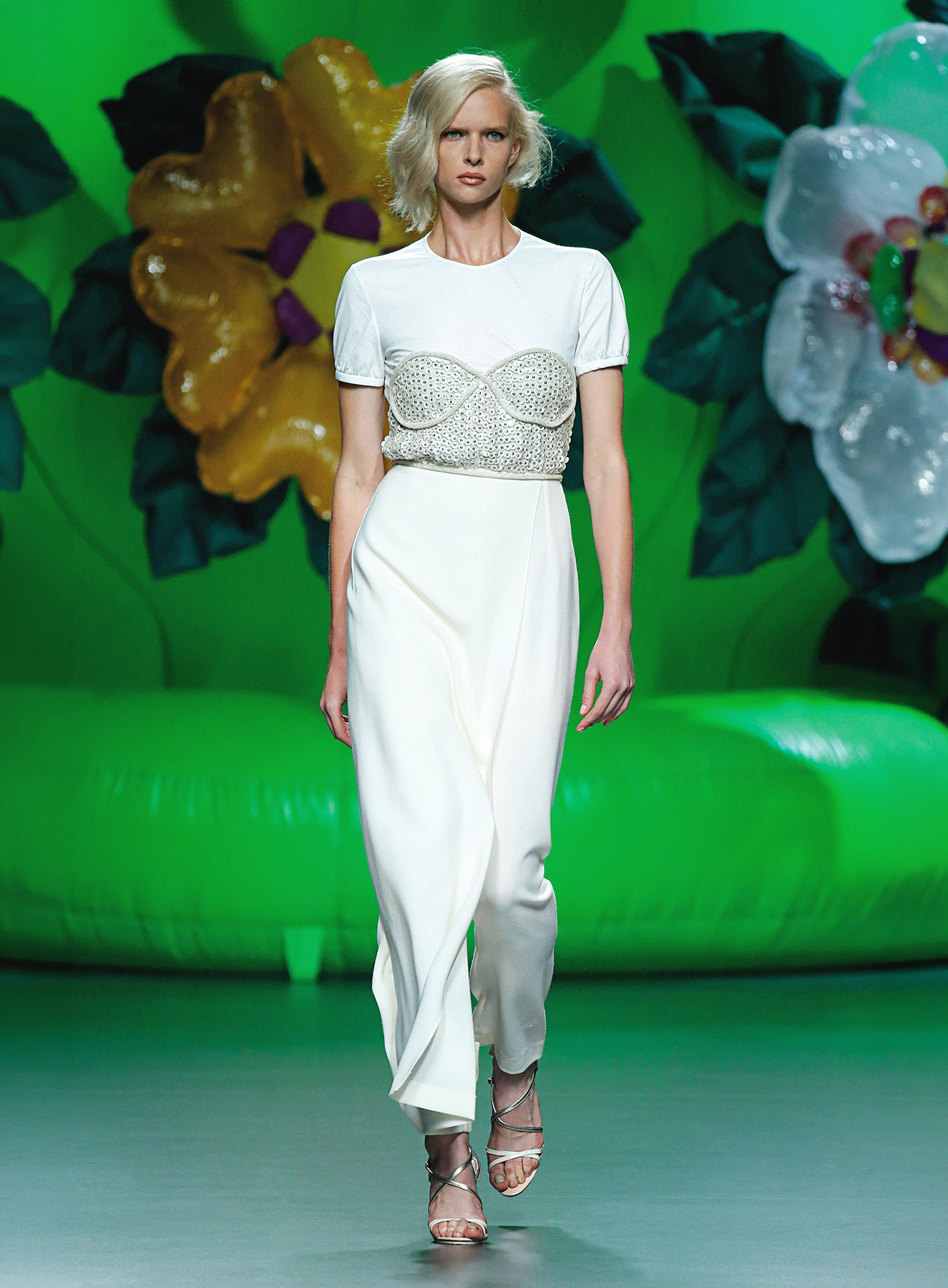
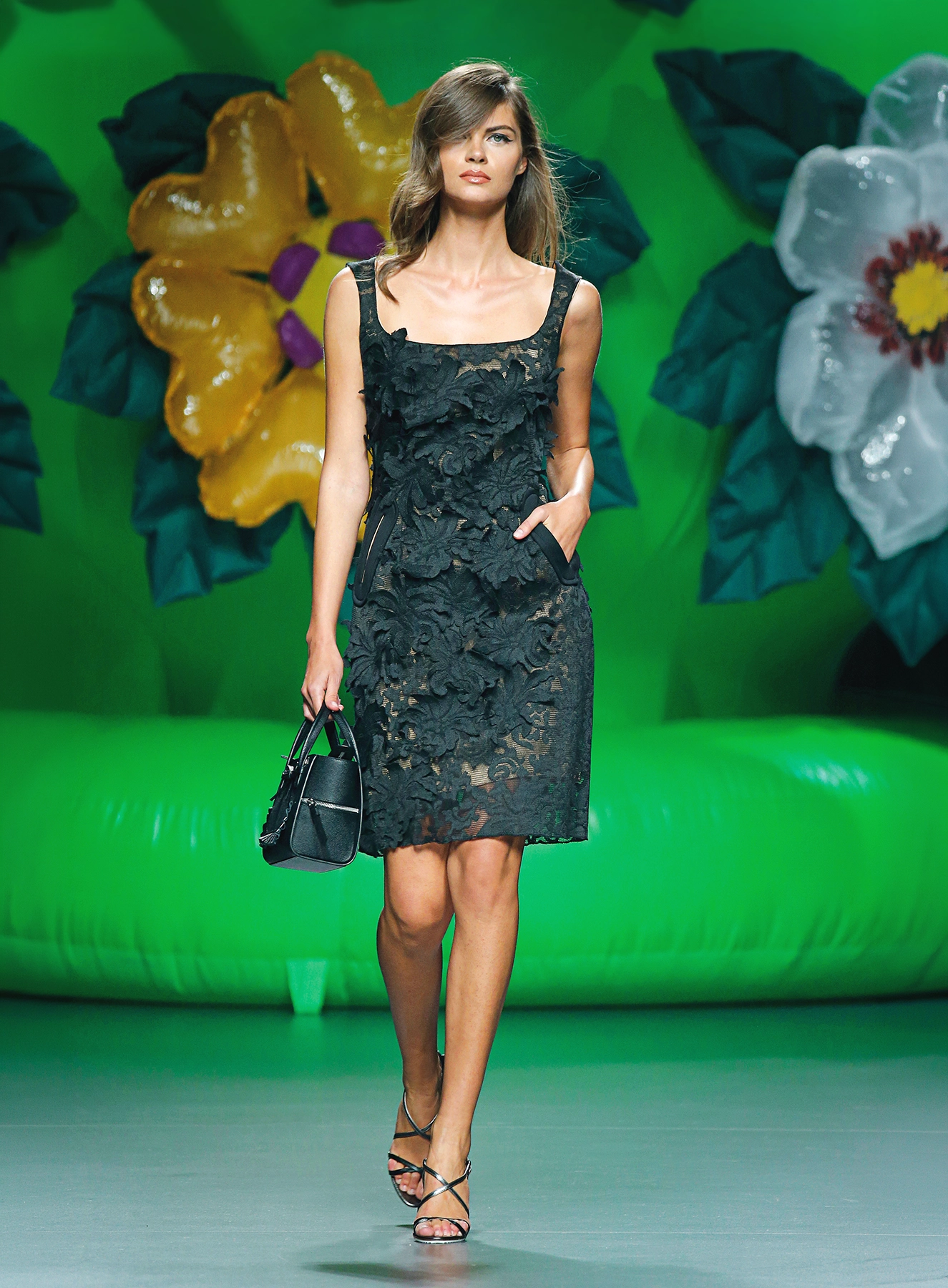
I try to remind myself every day that loving is, in itself, an act of resistance against forgetting.
Spring - Summer 2016
FOREVA

*
*
“You can’t take a picture of this because it’s already gone.” The final line of Six Feet Under, Alan Ball’s unforgettable series, always strikes me as a reminder of the fragility of life. Moments cannot be captured—they can only be lived. Everything slips away in an instant, even what we believe to be eternal. No image can hold it. Only memory. Only skin.
Foreva is born from that melancholic awareness: the certainty that what truly last are lived moments, small gestures, the unexpected tenderness of the everyday. Sometimes I think this is what love really is—the kind that hides inside the simplest routines and, without warning, changes us forever.
Love is incomprehensible, exhausting, luminous, contradictory. We never fully understand it, and yet we continue to search for it as if it were a revelation. Perhaps its beauty lies precisely there—in its resistance to being understood, in its elusive nature, like a secret that never quite reveals itself.
I like to think of love as a McGuffin: a mysterious force that holds the entire plot of our existence together. It doesn’t matter whether we understand it or not. What matters is that it pulls us forward, that it makes us move, like those films that seem to explain nothing and yet somehow say everything. Its power is inexplicable, its logic, absurd—but without it there would be no story, no magic, no reason to care. John Ford captured it perfectly, with humour, in one of his films:
“Mac, have you ever been in love?” “Nope, been a bartender all my life.”
I try to remind myself every day that loving is, in itself, an act of resistance against forgetting. And even when I lose sight of it, I know that those fleeting moments—the ones that cannot be photographed—are the ones that keep me alive.
“You can’t take a picture of this because it’s already gone.” The final line of Six Feet Under, Alan Ball’s unforgettable series, always strikes me as a reminder of the fragility of life. Moments cannot be captured—they can only be lived. Everything slips away in an instant, even what we believe to be eternal. No image can hold it. Only memory. Only skin.
Foreva is born from that melancholic awareness: the certainty that what truly last are lived moments, small gestures, the unexpected tenderness of the everyday. Sometimes I think this is what love really is—the kind that hides inside the simplest routines and, without warning, changes us forever.
Love is incomprehensible, exhausting, luminous, contradictory. We never fully understand it, and yet we continue to search for it as if it were a revelation. Perhaps its beauty lies precisely there—in its resistance to being understood, in its elusive nature, like a secret that never quite reveals itself.
I like to think of love as a McGuffin: a mysterious force that holds the entire plot of our existence together. It doesn’t matter whether we understand it or not. What matters is that it pulls us forward, that it makes us move, like those films that seem to explain nothing and yet somehow say everything. Its power is inexplicable, its logic, absurd—but without it there would be no story, no magic, no reason to care. John Ford captured it perfectly, with humour, in one of his films:
“Mac, have you ever been in love?” “Nope, been a bartender all my life.”
I try to remind myself every day that loving is, in itself, an act of resistance against forgetting. And even when I lose sight of it, I know that those fleeting moments—the ones that cannot be photographed—are the ones that keep me alive.

*
I know that those fleeting moments
-the ones that cannot be photographed-
are the ones that keep me alive.
*